You’re looking for answers to the questions that keep you up at night. Maybe you’ve already tried a lot: written down goals, done exercises, planned the steps. But what you were really looking for, you haven’t found yet: someone who truly listens, thinks along with you and makes you feel that your questions are in good hands.
At THOUGHTS you read thoughts from people who are going through things a lot like you. You think along, notice that you’re not alone, and if you like, you write along too. Over 440 thoughts are already here, in German and English, soon in Russian too. By 2028 we want to reach 1000.
Sound familiar?
Your head is full. News, appointments, worries, all talking at you at once. And at three in the morning your thoughts are going in circles.
Maybe you’ve already looked for support – a conversation, counselling, a course. Many promise quick “clarity”. But sooner or later you’re sitting alone with your questions again.
Sometimes there simply isn’t the money for expensive offers. Or you’re starting over in a new place, and nobody takes the time to explain how things work here. And maybe you know this moment: you tell someone what’s on your mind, and two sentences in, a ready-made piece of advice comes back. When all you wanted was for someone to listen.
What you’ll find at THOUGHTS
No template here, no rigid plan. You read thoughts from people who feel the way you do. You think along, tick a small question and maybe share something yourself. Nobody judges you. Nobody wants to fix you. Here people listen to you honestly, and if you come back tomorrow, we keep thinking together.
Who owns THOUGHTS – and why we’re called UNO.TEAM
On big platforms like Facebook or Reddit everybody writes, and in the end a corporation makes money from it or sells the texts to AI companies. THOUGHTS works differently. THOUGHTS is growing as part of our community UNO.TEAM – without a bureaucratic legal form, carried by mutual trust. Whoever takes part belongs to it and has a say.
For us, the short name UNO.TEAM holds several things at once:
One (unOne): UNO stands for the number one – because we live as one single humanity on one shared planet. Put the Romance and English words uno and one together and they touch in the letter O: unOne.
Understanding across borders: In German, UNO instantly brings to mind the United Nations – conversation between different languages, cultures and life paths.
A shared table: Almost everyone knows the card game Uno. The name instantly conjures people sitting together around one table.
“You know”: Say uno in English and it sounds like “you know” – that familiar little phrase in the middle of an honest conversation, where you understand each other without long explanations.
Our guiding idea is Humanity at Her Best. Part of it is the Ukrainian word „варті“ (varti), which means “worth”. Through Polish it is related to the German word „wert“, and it reminds us that every person is worth being seen, heard and respected.
Why your thoughts matter
Many people believe they have nothing important to say. Or they worry about being left behind by technology. Meanwhile, the big AI companies are soaking up people’s texts all over the web. They need them badly, because any AI without real human experience turns flat and empty. What you have lived through, felt and understood, no machine can invent.
Who THOUGHTS is for
For you, if your thoughts are going in circles and you want to keep thinking with others – no matter where you come from, what you do for a living or where you are in life right now.
People mostly find each other here when something in their life is shifting and they don’t want to think it through alone:
When everyday life carries on outside, but a lot is moving inside: You carry responsibility – in life, at work, in your family or for ageing parents. Between all the daily demands there’s hardly any room left for what you yourself think, feel and need. Here you can hear and sort your own thoughts again.
When familiar ground shakes and old answers give way: Maybe your work, your health or your plans for life are changing right now. Maybe you give a lot to others every day and are looking for a place where for once you don’t have to achieve anything or prove anything to anyone.
When you live between languages, cultures or new beginnings: Maybe it’s the many small hurdles – letters from the authorities, the unwritten rules, or the feeling of being alone with a big change. At THOUGHTS you’ll find thoughts in German, Russian and English that read as if they were your own. You can practise a language on the side and meet people who listen and explain. For many, Russian is the familiar everyday language; for some it has become difficult since the war – that’s why, step by step, we are opening the space to more languages such as Ukrainian.
Everyone brings their own experiences, breaks and questions. When we listen to each other instead of handing out quick advice, we notice where our thoughts want to go, we support one another and move a little closer together.
Who is behind THOUGHTS
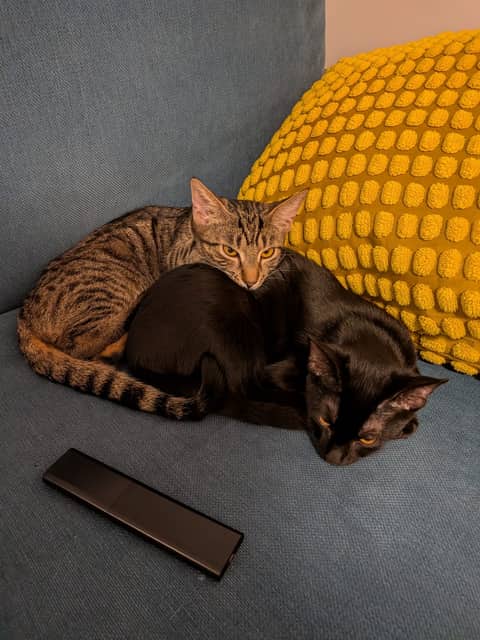
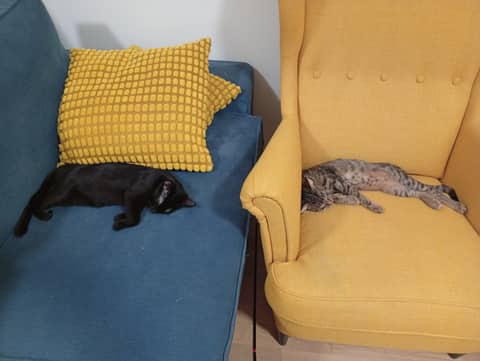
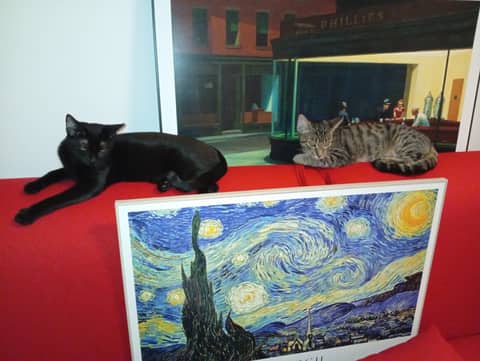
Right now UNO.TEAM is two people: Natalia and Torsten Därr. We live in Leipzig with our two sister cats, Masha and Dasha. And we’re open to growing with people who share our values and want to shape UNO.TEAM together with us.
Masha and Dasha – in charge of our daily lessons in trust, letting go, and taking breaks on time.
The first thoughts come from Torsten. He co-founded UNO.TEAM and writes from his own life so that you can find yours in it.
What he brings
Torsten was born in the Ore Mountains and grew up in the GDR. He knows what it’s like to be pushed into roles that make you small. He knows what it’s like when the worldview you believed in starts to crack. As a child, his father lived through the bombing of Chemnitz; as a child, his mother went hungry and was given food – of all people – by Soviet soldiers. From this he learned that humanity, lived out, can break through any image of the enemy.
He learned Russian through real encounters. Today he speaks German, Russian and English, is married to a Russian woman and has been interpreting at the Jobcenter for almost four years. He sits with people over official notices and CVs, accompanies them in everyday life and gives language training.
What moves him
Torsten writes about what matters to him. Maybe it matters to you too.
He belongs to Generation X – curious, independent, and driven by the joy of understanding and building things from the ground up.
What keeps him deeply grounded every day: writing and building 1000 Thoughts, life with his wife Natalia, their two sister cats Masha and Dasha, riding his Honda Forza 750, walking outdoors every day, and gratitude for everything he has in life.
His best thoughts come to him in the evening on his scooter. He speaks them into his phone while they’re still fresh.
Two cats, Masha and Dasha, teach him every day what trust and letting go mean.
His mother is almost 88. He is learning to take responsibility for her and swings between pride and worry.
Every day he works with AI and argues with it. In the process he learns how he wants to sound.
Natalia
Natalia is a millennial, Torsten belongs to Generation X. So at UNO.TEAM two generations sit at the same table. Like Torsten, she speaks three languages, and she works in public service.
Natalia comes from Russia. She had to leave her homeland because she fundamentally disagreed with its political system. Even so, her wish for Russia is a warm one: she hopes with all her heart that democratic conditions soon return to her homeland and that the country finds its true strength in humanity, culture and peaceful cooperation – rather than in imperial ambitions.
What others say
Oksana, from Ukraine, wrote to him in Russian, roughly: “You really did everything very well – attentively, competently and above all on time. Without your help it would have been very hard for me to find my way through all of this and to manage it on my own.”
Cornelia Ketscher on thought #419 Tongue, language and heart: “Love it – […] It moves me, it matches what I believe and also what I have learned over the last few years. […] It takes mindfulness in how we deal with our thoughts and our language (and our heart) – and we as humans can do that. AI can’t.”
What you read here
Good thoughts come while walking, in the shower, in the evening wind. Ten minutes later they’re often gone again. At THOUGHTS they get caught: spoken into the phone, sorted with the help of AI and written down.
Under each thought there’s a small question to tick. While ticking it, you think a little further for yourself. And if you’re learning German, Russian or English right now, you practise along the way. THOUGHTS stays free of ads, and nobody tracks what you read.
Listening instead of advice
When something weighs on us, we rarely look for a lecture. We look for someone we can confide in, who is still there even when there’s no quick answer.
AI helps us here as a tool for sorting. It’s always available, stays patient and adapts to your own pace. It can’t feel with you – that’s what the people who write, read and meet each other here do.
Inner dialogues
In an inner dialogue, two voices inside the same head talk to each other. One is tired and doubting, the other asks kindly. Reading it feels as if you were listening to your own thoughts.
They start in the middle of a thought, exactly the way it sounds in your head in everyday life.
The sentences are short, and between them you’re free to keep thinking. A thought is allowed to stay open.
We leave out forced success or coaching phrases.
Your feeling is allowed to simply be there, just as it is right now.
At the end there’s an open question, for example: “Which sentence could have been yours?” Every answer fits.
Afterwards you can share a thought of your own, if you feel like it.
If someone notices that life is especially hard right now, we honestly point to human contact and counselling services.
What people write about here
Topic
What it’s about
The after
What remains when a long conversation is over and everyday life knocks again
The courage to say it
How we learn to say honestly what moves us, and to really listen to each other
Transitions
Career breaks, separation, moving, caregiving, dealing with authorities, starting over
The full head
Thoughts that circle at night and look for a way out
Small bright spots
An encounter in the neighbourhood, a sentence that sticks, a walk
Red boots
Old roles and expectations we grow out of, step by step
When the worldview cracks
How we go on when the familiar no longer holds
The body gets older
Energy in everyday life, movement, tiredness and a kind look at ourselves
Carrying it together
How we notice in time when we need a break and support
Thinking on the move
Why things sort themselves out while walking or riding that stay stuck at the desk
Animals
What cats like Masha and Dasha know about trust and letting go
When parents grow old
Pride, care and growing into new responsibility together
Friction with the machine
What working and arguing with AI teaches us about our own human voice
What an inner dialogue can sound like
“The sessions are over. Ten appointments, everything talked through. I should be further along by now.” “And – are you?” “A bit. But that wasn’t really the point for me. The most important thing was that someone simply listened to me for an hour.” “And now you’re missing that listening.” “Yes. I wonder who I can tell this to, so that my thought is simply allowed to be there for a while.” “Then tell it to yourself first. At your own pace. I’m listening.”
If you want to tell something yourself
Every person carries experiences that could be a bright spot for someone else. If you have a thought that keeps you busy, you can share it here. This is how it works:
Speak it: You simply speak your thought into your phone – on a walk, on the way home, whenever it shows up. As naturally as you’d tell someone you trust, in German, Russian or English.
Sort it: We sit down together with AI. It asks questions back and helps make the thread visible. We show you, step by step, how to use it as a tool for yourself.
Your voice stays: Your personal way of speaking, your images, your rough edges stay. AI helps with the polish and with translating into the other languages, but the thought stays yours through and through.
Together, not alone: Torsten accompanies you, and gradually other people from our circle too – one-to-one or at small round tables.
What it gives you
You feel that your own story and your experience count.
You learn in practice how AI helps you think and put things into words in everyday life, while you stay at the wheel.
You find people who feel similarly – here online and in person in Leipzig.
You simply contribute what you can right now: time, a thought, a talent, a contact or a financial contribution.
What we care about – and what comes next
What we care about at UNO.TEAM
The dignity of every person comes first for us – exactly as anchored in the first article of the German Basic Law. We meet each other with respect, fairness and an open heart, we listen and we answer honestly.
In our growing community UNO.TEAM we stand up for each other as a community of solidarity: we share our knowledge and our materials, help each other with letters from the authorities or in difficult situations, step in for each other when someone falls ill, and build fair, reliable ways of working and earning step by step. We shape this space to be open to all genders, cultures and generations, use digital technology in harmony with the natural foundations of life on our Earth – and, for all the depth, we always keep a warm, healthy sense of humour.
For us, real cooperation doesn’t need a bureaucratic legal shell. It lives from the spirit of mutual trust – just as Mara Zepeda and Jennifer Brandel described in their 2016 essay “Sex & Startups”, which sparked the Zebras Unite movement: away from a patriarchal startup and agency culture obsessed with disrupting, crushing, owning and killing, and ruled by what Rebecca Solnit, quoting a friend, calls “the tyranny of the quantifiable”. Towards “mundane” ideals in the original sense of the word – ideals that belong to the world: repairing, cultivating and connecting, building for money and meaning over the long haul, with people seen as contributors, not heroes.
Our path in three stages (2027 to 2030)
2027 to 2028 – 1000 thoughts: Our collection grows to 1000 real thoughts, each with a small question to think along with, plus inner dialogues and stories in German, Russian and English.
2028 to 2029 – Many voices, one community: More and more people speak in their thoughts and write along. Whoever contributes becomes part of UNO.TEAM and helps shape the shared path.
2029 to 2030 – Two doors (the AI companies pay the community):
The door for people stays wide open: you give what you can – time, a thought, a talent, a contact or money. Everyone is welcome.
The door for the reading robots of the big AI companies gets a bouncer: these programs comb the web every day for real human texts. If they want to learn from the experiences at THOUGHTS, they pay for every visit. That money flows straight to the community of people who write here.
Where AI stops
A machine has no life of its own. It helps us sort and translate thoughts, but real compassion always happens from person to person. If someone is in a deep crisis or urgently needs personal support, we therefore point directly to experienced human counselling and help services – in Russian, Ukrainian and English too.
Frequently asked questions
What actually is THOUGHTS?
A living space for thoughts, stories and conversations from real life – in German, Russian and English. About everyday life, transitions, language, work, getting older, sticking together and everything that moves us as human beings. Under every post there’s a small question to think along with. THOUGHTS is carried by the growing UNO.TEAM community in Leipzig.
Why even more texts, when the internet is full of AI texts already?
Exactly because of that. A machine has never lain awake at night, never cared for someone close, never started over in a foreign country, and never suddenly felt on a walk which next step will hold. Only we humans experience that.
What’s different here from the big social media platforms?
There, the data and the ad revenue belong to a corporation. Here, THOUGHTS grows as a community built on mutual trust: whoever writes along and helps shape it carries this project together with the others.
I don’t think I’m a talented writer. Can I still take part?
Yes, any time. You simply speak your thought into your phone the way you’d tell it on a walk. Then we sort it together with the help of AI, while your own voice is fully kept.
What do I get out of reading or taking part regularly?
You notice where your own thoughts want to go, discover how other people handle similar situations, learn a confident, human way of working with AI along the way and, if you wish, find a place in a warm-hearted community.
Does reading THOUGHTS cost anything?
No. All over 440 thoughts are free to read, with no paywall. Our thinking space should be open to every person.
What does it cost?
Everyone gives what is possible right now: time, a thought of their own, a talent, a helpful contact or a financial contribution. Later, the reading robots of the big AI companies will pay when they want to access our collection – and that income flows to the people who write.
Why does UNO.TEAM write here in German, English and Russian?
Because that’s our everyday life in Leipzig. In the neighbourhood, at the kitchen table and at the public office, people sit together who think, hope and worry in different languages. Torsten has been interpreting between German and Russian for almost four years and sees every day how much easier a conversation becomes when someone listens in your own language. That’s why we tell every thought the way you would really say it in each language – not translated word for word, but so that it feels just as familiar in German, English and Russian. That way we get talking across language borders, and anyone learning one of the three languages practises along the way. Many thoughts already exist in German and English; in Russian the collection is growing step by step.
Stay in touch
Would you like to read along, share your own thoughts or simply get to know us? Feel free to send us a short message.
Our promise: Your message stays confidential with us. We never pass your data on to anyone and never send advertising.
You:“Even more texts? My head is full already, and the internet is overflowing with AI texts. Why should I read here, or even tell something myself?”
THOUGHTS: “Exactly because of that. Notice how smooth and empty many of those automatic texts feel? A machine knows neither real worry nor real relief. It has never walked through the park after a difficult conversation until, somewhere along the way, something suddenly fell into place.”
You:“True. Thoughts like that often come to me on walks or on the go. Shortly after, they’re gone again.”
THOUGHTS: “That’s why we simply speak them into the phone on the go, completely unpolished. Afterwards we help you sort them, with AI as a tool. Your personal voice stays exactly the way you are.”
You:“And then what happens to it?”
THOUGHTS: “Then it becomes a thought on THOUGHTS, with a small question to keep thinking. And when, three months later, someone lies awake at night with exactly this question about life, she reads your thought – and immediately feels: I’m not alone with this.”
A longer text by Torsten: Hannah Arendt and thinking
I rarely use Facebook anymore – like today. There I got a friend request from Andrea Bieneck, whom I know from my childhood in Neuhausen in the Ore Mountains. On her profile I came across a quote from Hannah Arendt, who was born 120 years ago on 14 October in what is today Hannover-Linden (which immediately reminded me of my connection to Hanover, to Diana Osterhage and Wandelkraft): “There are no dangerous thoughts; thinking itself is dangerous.”
The accompanying text said: “Hannah Arendt was considered an uncomfortable thinker who wanted to understand. For her, that meant thinking to the place where it hurts. In ‘The Origins of Totalitarianism’ she analysed how totalitarian systems work.” This motif describes, at its core, exactly what I am pursuing with THOUGHTS.
Arendt’s analysis is more relevant than ever 120 years after her birth – because totalitarian structures develop creepingly even in the middle of our so-called democracy. The term “democracy” is used dangerously inflationarily today. I spent the first 18 years of my life in a state that called itself the “German Democratic Republic”, and there is also a “Democratic Republic of the Congo”. Not everything labelled democracy actually contains democracy.
But where does the gradual transition into the totalitarian begin? It begins in the institutions we have built since the Industrial Revolution: in strictly hierarchical systems. At the core of these hierarchies the Peter Principle is at work, along with a structural blockade on thinking: a hierarchy only functions as long as people at every level carry out exactly the instructions that were decided at some point further up.
This is exactly where our modern bureaucracy touches what Hannah Arendt called the “banality of evil”: injustice and institutional arbitrariness often do not arise from fanatical monsters, but from perfectly ordinary cogs in the machine who stop thinking for themselves. When this authority-obeying arbitrariness meets the resignation of citizens who exhaustedly accept power imbalances, patriarchal structures and discrimination, a system slides creepingly into totalitarian patterns – at whose outermost end fascism lurks.
That our formal democracy is eroding today and old hierarchies are beginning to totter can also be explained with the systems-theory model of the Window of Viability: our institutions were trimmed one-sidedly, like machines, for maximum efficiency. A system optimised only for rigid efficiency loses its resilience. It can no longer respond flexibly to new, complex crises, leaves the Window of Viability and collapses under its own rigidity.
Translated from German. The original is on the German version of this page.